Some of My Previous Books & Reviews
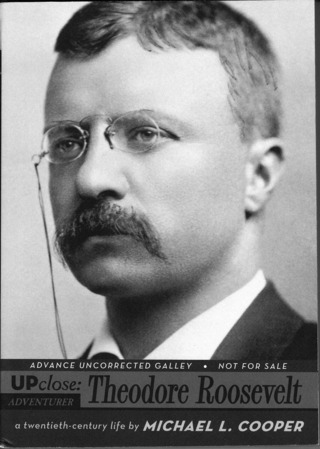
STARRED REVIEW FROM KIRKUS
In a superb biography both personal and opinionated, Cooper calls Theodore Roosevelt "the hero America needed." At the beginning of the 20th century, the United States was becoming a nation of big cities and huge corporations, and the major issue Roosevelt faced will sound familiar to readers today-the role of a strong federal government in dealing with the "unrestricted and ill-regulated individualism" of banks and corporations and ensuring a vital economy and social justice at the same time. Written with a vigor and enthusiasm to match the subject, the volume is well-researched and documented, incorporating many direct quotations to make Roosevelt accessible and knowable. Not just a "road to the White House" biography, this is a look at the full life and times of the 26th president, his family, his enthusiasms and losses and the significance of his presidency. Readers will absorb much about history and politics as they learn the story behind the face on Mount Rushmore. Another strong entry in the fine Up Close series.
HORN BOOK REVIEW
After giving refreshingly short shrift to the familiar story of TR as a young boy overcoming asthma and living up to his father's wishes, Cooper focuses his biography on Roosevelt the man: husband, father, politician, adventurer, and champion of the progressive government. (Although the term progressive isn't completely defined until well into the book, in this case actions speak louder than words.) It's a rousing tale, full of the passions of both the man and his times. Pertinent quotes show the juggling act between Republican Party politics and Roosevelt's own popularity. For example, after McKinley's assassination, "Old Guard" Republican Mark Hanna comments: "I told William McKinley that it was a mistake to nominate that wild man...Now look, that damned cowboy is President of the United States!" Cooper also covers Roosevelt's post-presidency, a period often presented as a near-footnote in many biographies, but one that captures the sum of the man's personal failures and political ambition.
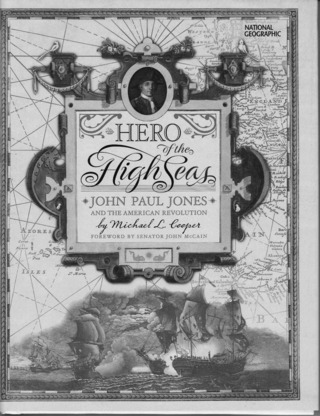
SCHOOL LIBRARY JOURNAL REVIEW
Cooper charts his subject’s life from a scandal-ridden Scottish captain on a trading ship to a man of self-invention who came to the American colonies to start a new life and became a naval hero. Jones is presented as a loyal captain, an arrogant leader, a determined sailor, and a flagrant social climber. The narrative style will appeal to reluctant readers, for it reads like a chronicle of thrilling naval adventures; facts about military strategy, weaponary, and sailing are cleverly interwoven into detailed descriptions of battles with enemy ships and incidents of mutiny. The text is clear and understandable, even in view of the possibly unfamiliar nautical terminology. No mention is made of Jones’s original livelihood as a third mate on a slave ship and his initial indifference toward the cruelties of chattel slavery. Archival reproductions, maps, naval antiques, and battle-plan diagrams appear throughout. Additionally, there is a foreword by Senator John McCain, a time line of Jones’s life and Colonial American history, a sailing glossary, and suggestions for further reading and places to visit. This is a solid purchase for libraries in need of exciting nonfiction titles as opposed to routine biographies for assignments.–Michael Santangelo, Brooklyn Public Library
KIRKUS REVIEW
Tracing the parallel stories of the colonies' road to independence and Jones's road to heroism, Cooper writes with clear and lively prose, effectively incorporating quotations for dramatic effect. Maps and photographs of period artwork and historical artifacts enliven the text. Source notes are solid, a suggestion for further reading includes a small but excellent set of works for young readers and a list of places to visit will support those who wish to learn more. Though the final pages compress many years and much history, this is an excellent portrait of a character with many flaws, demonstrating, as Senator John McCain says in the foreword, "the ability to achieve great things in spite of our weaknesses." (timeline, words and expressions from the historical era, index) (Nonfiction. 10+)
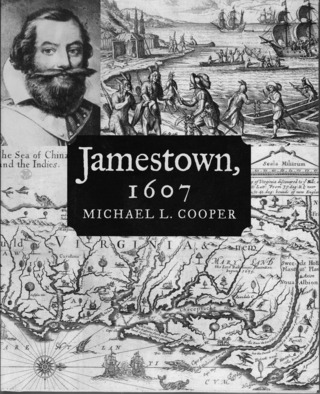
BOOKLIST REVIEW
Despite the single-year purview suggested by its title, this well-designed book presents a history of Jamestown from late 1606, when the Discovery, the Susan Constant, and the Godspeed set sail from London to Virginia, to 1609, when John Smith's injuries forced his return to England. Based largely on the writings of those present, notably Smith, the book offers a very readable, detailed account of the settlers' exploration, deprivation, starvation, illness, and political infighting as well as their relations with Native Americans, which encompassed cordiality and kindness as well as great brutality. Large black-and-white reproductions of period paintings, engravings, drawings, maps, and documents illustrate the book. Back matter includes a time line, source notes for quotes and some statistics, short lists of recommended books and Internet sites, and a lengthy discussion of sources, in which Cooper notes the lack of primary documents about the Native Americans from any but the European point of view. Vivid and informative. Carolyn Phelan
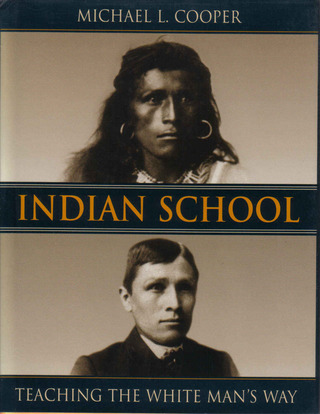
"Generous helpings of contemporary black-and-white photographs and statements give many students both voices and faces." KIRKUS Starred review
CHILDREN'S LITERATURE REVIEW
This is a sad picture of a shameful period of American history. Some facets may be familiar to the reader, while others are less well known, such as how many children were removed from their parents, some of them dragged across the country and how many died from depression and disease. Cooper describes various schools, their set up, and the way students were educated, housed, directed, and disciplined. The true poignancy of the books comes from Cooper's relaying the students' stories and offering a wealth of old photographs. Readers will be moved by the heartbreaking tales of these once-proud children whose hair, dress, and customs were stolen from them, and will silently cheer the victories of those who coped with the horrors and maintained a sense of self against assaults to their dignity. 1999, Clarion, Ages 9 up, $15.00. Reviewer: Susie Wilde
Carter Woodson Award for the Best Children’s Book of 2003 on ethnicity in American history; the National Council for the Social Studies.
2003 CCBC Choices List (Cooperative Children's Book Center).
A Notable Children Books in the Field of Social Studies.
PUBLISHERS WEEKLY REVIEW
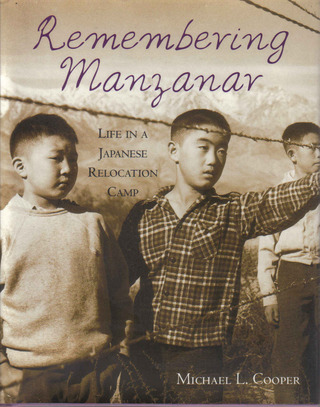
In this incisive companion to Fighting for Honor: Japanese Americans and World War II, Cooper examines life in the Manzanar relocation camp in eastern California, where more than 10,000 Japanese Americans were exiled between March 1942 and November 1945. Framing his account with chapters describing his 2001 visit to the annual Manzanar Pilgrimage, which attracts former residents and their descendants to the site, the author conveys the lasting effects of and strong sentiments still associated with the government's WWII confinement of American citizens, an act he deems "one of the most serious mistakes in our nation's history." Cooper draws from primary sources, including the records of the War Relocation Authority and microfilm copies of the Manzanar Free Press, a biweekly newspaper published in the camp, to compose a clear portrait of residents' living conditions and daily routines. The inclusion of quotes from those who lived at Manzanar gives the book a sense of immediacy as well as a sharp emotional edge. Reinforcing the bitter irony of this experience are such pointed comments as that of a then 12-year-old boy, who asks, "What's the use of studying American history when we're behind barbed wire?" Carefully selected photos (including some by Dorothea Lange and Ansel Adams) balance government-sanctioned and unofficial pictures of life in the camp. Visuals and text resolutely portray a painful chapter in America's past.
KIRKUS REVIEW
The author’s visit to Manzanar, one of ten Japanese internment camps established during WWII, serves as the frame for this exploration of the forced evacuation of over 100,000 Japanese and Japanese-Americans and their lives in the relocation camp. Cooper’s (Slave Spirituals and the Jubilee Singers, not reviewed, etc.) concise prose describes how the bombing of Pearl Harbor led to the building of the camps. Later chapters detail how the prisoners struggled to adapt to surreal, humiliating conditions, slowly introducing Japanese food to the mess hall menus, gardening, playing sports, and going to school. Drawing heavily on primary-source material, including archival and contemporary interviews with internees and excerpts from the Manzanar Free Press, the text allows the prisoners to speak for themselves. Archival photographs lavishly illustrate the narrative, and one of the volume’s greatest strength is the opening discussion of the many photographers who chronicled life in the camps, from Dorothea Lange, Ansel Adams, and others brought in by the government, to Toyo Miyatake, an internee who was allowed to compose and set up his photographs but who had to have a camp staff person press the shutter. Each photograph is credited, so readers can distinguish between US government propaganda and more accurate portrayals of camp life. An end note describes the author’s sources, but there are no specific references within the text. One great weakness is the history’s abrupt end: there is no effort to document the internees’ return to life outside the camps. That said, this offering stands as a worthy addition to the literature of the internment camps; the author’s comparison of post-Pearl Harbor US to post-9/11 US underscores his passionate plea to remember.
*A Notable Children Books in Social Studies.
*Books for the Teen Age, New York Public Library.
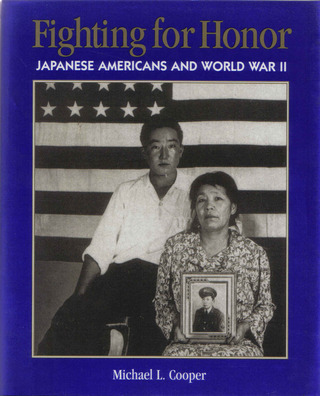
A stirring account of Japanese Americans in World War II, based mainly on diaries, autobiographies, and the military records of the 442nd Regimental Combat Team, which was known as the Purple Heart Battalion because of its bravery. After the attack on Pearl Harbor in 1941, all people on the West Coast of Japanese heritage, whether resident aliens or citizens, were forced to move into internment camps. But 1,200 young men from the camps, along with 10,000 other GIs of Japanese heritage, became some of the most decorated soldiers in the war as part of the 442nd. Author Michel L. Cooper tells of the remarkable bravery of these Nisei soldiers, whose heroism in battles in Europe contrasted with the prejudice that Japanese Americans faced at home. Chronology, end notes, suggestions for further research, index.
SCHOOL LIBRARY JOURNAL
This explanation of the unfair circumstances and incredible heroism of first- and second-generation Japanese Americans during World War II is similar in tone and format to Jerry Stanley's I Am an American (Crown, 1994). What distinguishes Cooper's effort is the more extensive, descriptive, and sometimes grisly attention given to these soldiers' contributions to the military conflict in Europe. As an example, the Japanese Americans who served in the 100th/442nd battalion became "the most highly decorated unit in U.S. military history" at a time when most of their families had been forcibly removed from their homes and businesses in Washington, Oregon, and California. Cooper begins with a strong first chapter that establishes the extent of the American prejudice against these citizens and the post-Pearl Harbor hysteria that led to the establishment of the War Relocation Authority. The author then questions why this happened and responds with solid cause and effect examples, utilizing relevant archival photographs of these "barbed wire communities." On the war front, the descriptions of individual acts of bravery in Europe are drawn from first-person accounts and other sources, and while the geography is not introduced well, the battles' objectives, actions, and results are clear.-Andrew Medlar, Chicago Public Library, IL Copyright 2001 Cahners Business Information.
BOOKLIST REVIEW
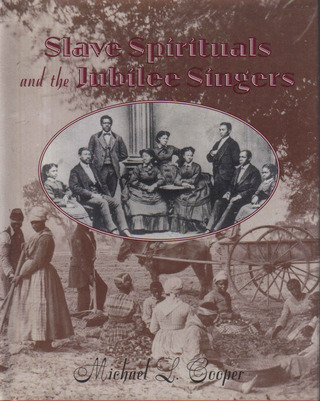
The first half of this intriguing book surveys the music of African American slaves, while the latter focuses on the Jubilee Singers. From its origins in African vocal and instrumental music to its development into songs of work, complaint, defiance, play, hope, and religion, slave music was so central to slave culture that, after emancipation, African Americans were eager to put the old songs behind them. According to Cooper, now-familiar spirituals might have been forgotten without the Fisk University Jubilee Singers, who toured the U.S and Europe during the 1870s, raising funds for their impoverished university and ensuring their music's immortality. Cooper tells an interesting story, illustrated with well-chosen black-and-white reproductions of period photos, engravings, posters, prints, and paintings. Source notes, a bibliography, and the words and music for seven spirituals are appended. Carolyn PhelanCopyright © American Library Association.
MIDWEST BOOK REVIEW
Michael Cooper's Slave Spirituals And The Jubilee Singers provides a revealing history of the music which reflected the hopes and despairs of slavery. The Jubilee Singers embarked on a tour to raise money for their struggling school and succeeded in not only achieving personal fame, but bringing slave spirituals to the world. Archival prints and photos are included in this inspirational account. 5 out of 5 stars.
SCHOOL LIBRARY JOURNAL REVIEW
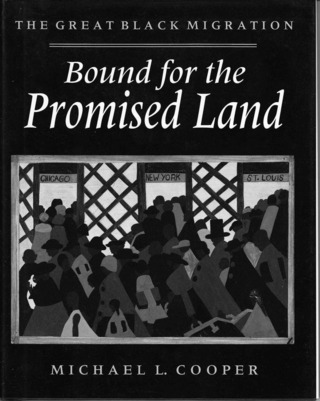
Cooper devotes this book to the event that not only changed the face of African American life, but also the face of America. From 1915 to approximately 1930, some one million rural Southern blacks left their homes and migrated to cities in the North and in the Midwest. Cooper tells this story through first-person accounts of the people who actually made the journeys, newspaper and other accounts, and through black-and-white photographs. He sets the stage for this great migration by discussing the conditions under which blacks lived in the South and their desires for something better. He describes the kinds of neighborhoods they came to and what they made of them, as well as the types of jobs they had to take. The prejudice and violence they encountered are vividly chronicled. Yet out of all of that came thriving black institutions, the Harlem Renaissance, and genuine opportunity. This is an important title because of the sensitive and thorough manner in which Cooper treats his subject.
BOOKLIST REVIEW
About one million African Americans left the South from 1915 to 1930 in search of better lives in the cities of the North. This short history of what is called the Great Migration discusses why black people left, what they hoped for, what they found, and how they changed America. Several chapters focus on those who came to Chicago and on the important role of the nation's largest black-owned newspaper, the Chicago Defender. There's also a brief account of the excitement of the Harlem Renaissance and the leading figures in the arts. Fascinating archival black-and-white photographs add interest throughout the text, and endnotes discuss the sources used in each chapter. The full-color cover picture is from Jacob Lawrence's famous series of paintings collected in The Great Migration (1993), which is a dramatic book to use with this history. Older readers may go from here to Nicholas Lemann's adult book The Promised Land (1991). Hazel Rochman
SCHOOL LBRARY JOURNAL REVIEW
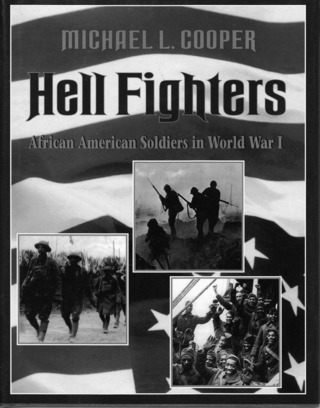
Grade 7 Up. More than just a history that illuminates a little-known aspect of American participation in the Great War of 1914-1918, this ambitious work also examines one very important phase in the evolution of civil rights for African Americans. In highly readable prose, Cooper tells the story of the mostly black Fifteenth New York Voluntary Infantry of the National Guard from its formation in 1916 through its transformation into the 369th regiment, its service in France, and its return to a triumphal parade down New York City's Fifth Avenue. The author gives sufficient background so that readers are informed of the existence of segregated regiments with mostly white officers and the dearth of high-ranking black officers from the Civil War to, during, and after World War I. Cooper describes the struggles that the officers of the Fifteenth had in obtaining uniforms, equipment, and other supplies. In France, it was only as a result of a personal appeal to General John J. Pershing that the unit was put into combat under French command; it was at this time that it was renamed the 369th Regiment of the U.S. Army. It was in May of 1918 that the 369th earned the nickname of "Hell Fighters" (bestowed by the African-American newspapers back home in Harlem). Coverage is augmented with a good selection of archival black-and-white photographs.
BOOKLIST REVIEW
Not much was expected from the Fifteenth New York Voluntary Infantry, made up in great part by African American waiters, porters, and doormen from Harlem, but the group came to be known as the Hell Fighters during the fierce fighting of World War I. Cooper explores the regiment's humble beginnings and its training in South Carolina, which was marred by the racism of local citizens, as well as the reception it received in France, where people were far more open to black soldiers. He also briefly describes key skirmishes, notes the awards and medals won, and shows the contrast between the menial postwar duties (finding dismembered limbs on the battlefield) and the glorious homecoming parade in New York City. The subject is generally well presented, although the main text is frequently interrupted by poorly placed spreads on related topics. A chronology, map, and reading list are included.
SCHOOL LIBRARY JOURNAL REVIEW
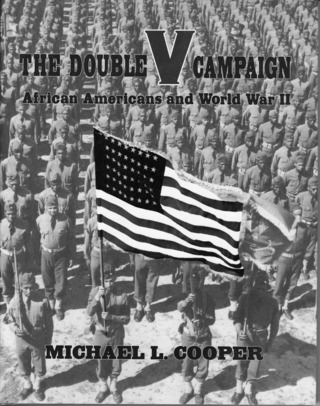
Cooper examines the two-part campaign waged by African Americans during the Second World War, which emphasized the defeat of fascist states abroad and the improvement of civil rights and economic opportunities at home. He provides brief background about both the causes of the war and the levels of discrimination that blacks faced in the U.S. He explains how the constant efforts of countless individuals broke down some of the racial barriers within the armed services. The author describes the training blacks received, their treatment by and their difficulties with the white power structure, and their battlefield performances. He is objective about his subject, detailing both the strengths and weaknesses of the African-American servicepeople. Numerous black-and-white photographs show the participation of these men and women in all aspects of the war effort. This book will draw both report writers and general readers. It complements titles such as Jacqueline Harris's The Tuskegee Airmen (Dillon, 1995) and Joe Trotter's From a Raw Deal to a New Deal? (Oxford, 1996), which places the black war experience in the broader context of an era and provides a fuller explanation of how the Double V campaign influenced the post-war civil rights movement.
SCHOOL LIBRARY JOURNAL REVIEW
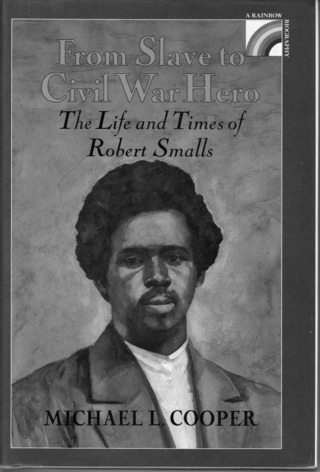
Grade 5-8-Smalls was a slave in Charleston, SC, who worked as the pilot on a cotton steamer. In May, 1862, he and eight crew members commandeered the boat and, after stopping to pick up family members, "defected" to the Yankees. He went on to become a hero in the African American community and a U.S. Congressman. Cooper brings his story to life quite well, elucidating the confusing era of Reconstruction so that it is easily understood. The book includes a good glossary and black-and-white reproductions. A wonderful addition to any library, filling a much-needed gap in biographical material for this era and adding some diversity to Civil War collections.